Personalized blood circulation constraint rehab training (PBFR) is a game-changing injury healing treatment that is producing dramatically favorable results: Decrease atrophy and loss of strength from disuse and non-weight bearing after injuries Boost strength with only 30% loads Boost hypertrophy with only 30% loads Improve muscle endurance in 1/3 the time Improve muscle protein synthesis in the senior Improve strength and hypertrophy after surgery Improve muscle activation Increase growth hormone responses.
Muscle weak point commonly takes place in a variety of conditions and pathologies. High load resistance training has been shown to be the most successful methods in enhancing muscular strength and obtaining muscle hypertrophy. The problem that exists is that in specific populations that require muscle enhancing eg Chronic Pain Patients or post-operative clients, high load and high intensity exercises may not be clinically proper.
It has actually been used in the health club setting for some time but it is getting appeal in scientific settings. BFR training was initially developed in the 1960's in Japan and understood as KAATSU training.
It can be applied to either the upper or lower limb. The cuff is then inflated to a specific pressure with the goal of obtaining partial arterial and total venous occlusion. The patient is then asked to perform resistance workouts at a low strength of 20-30% of 1 repetition max (1RM), with high repeatings per set (15-30) and short rest periods in between sets (30 seconds) Understanding the Physiology of Muscle Hypertrophy. [modify modify source] Muscle hypertrophy is the boost in size of the muscle in addition to a boost of the protein material within the fibres.
Muscle stress and metabolic stress are the two main factors accountable for muscle hypertrophy. Mechanical Tension & Metabolic Tension [modify modify source] When a muscle is positioned under mechanical tension, the concentration of anabolic hormone levels increase. The activation of myogenic stem cells and the raised anabolic hormones lead to protein metabolic process and as such muscle hypertrophy can happen.
Development hormonal agent itself does not straight trigger muscle hypertrophy but it helps muscle healing and thus potentially facilitates the muscle reinforcing procedure. The build-up of lactate and hydrogen ions (eg in hypoxic training) more boosts the release of growth hormonal agent.
Myostatin controls and inhibits cell growth in muscle tissue. Resistance training results in the compression of blood vessels within the muscles being trained.
This leads to a boost in anaerobic lactic metabolism and the production of lactate. When there is blood pooling and a build-up of metabolites cell swelling happens. This swelling within the cells causes an anabolic response and results in muscle hypertrophy. The cell swelling might really cause mechanical tension which will then activate the myogenic stem cells as discussed above.
The cuff is put proximally to the muscle being workout and low strength exercises can then be performed. Since the outflow of blood is limited utilizing the cuff capillary blood that has a low oxygen content gathers and there is an increase in protons and lactic acid. The exact same physiological adjustments to the muscle (eg release of hormonal agents, hypoxia and cell swelling) will take place during the BFR training and low intensity exercise as would accompany high strength exercise.
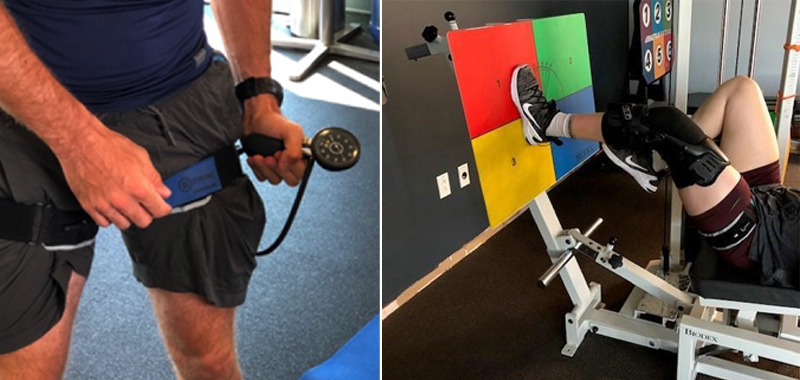
( 1) Low intensity BFR (LI-BFR) leads to a boost in the water material of the muscle cells (cell swelling). It also speeds up the recruitment of fast-twitch muscle fibres. It is also assumed that when the cuff is removed a hyperemia (excess of blood in the capillary) will form and this will cause additional cell swelling.
These boosts were comparable to gains acquired as a result of high-intensity workout without BFR A study comparing (1) high intensity, (2) low intensity, (3) low and high strength with BFR and (4) low intensity with BFR. While all 4 workout routines produced increases in torque, muscle activations and muscle endurance over a 6 week duration - the high strength (group 1) and BFR (groups 3 and 4) produced the best effect size and were similar to each other.