Patients or post-operative clients, high load and high strength exercises may not be clinically appropriate.
It has actually been utilized in the gym setting for some time however it is acquiring appeal in scientific settings. BFR training was at first developed in the 1960's in Japan and understood as KAATSU training.
It can be applied to either the upper or lower limb. The cuff is then inflated to a specific pressure with the goal of acquiring partial arterial and total venous occlusion. The patient is then asked to perform resistance exercises at a low intensity of 20-30% of 1 repeating max (1RM), with high repetitions per set (15-30) and short rest intervals in between sets (30 seconds) Understanding the Physiology of Muscle Hypertrophy. [modify modify source] Muscle hypertrophy is the boost in size of the muscle along with a boost of the protein content within the fibres.
Muscle stress and metabolic tension are the 2 primary factors accountable for muscle hypertrophy. Mechanical Tension & Metabolic Tension [modify edit source] When a muscle is placed under mechanical tension, the concentration of anabolic hormone levels increase. The activation of myogenic stem cells and the elevated anabolic hormones result in protein metabolic process and as such muscle hypertrophy can take place.
Development hormone itself does not straight trigger muscle hypertrophy but it aids muscle healing and thus possibly helps with the muscle reinforcing process. The build-up of lactate and hydrogen ions (eg in hypoxic training) more boosts the release of growth hormone.
Myostatin controls and hinders cell development in muscle tissue. It requires to be basically shut down for muscle hypertrophy to occur. Resistance training results in the compression of blood vessels within the muscles being trained. This causes an hypoxic environment due to a reduction in oxygen shipment to the muscle.
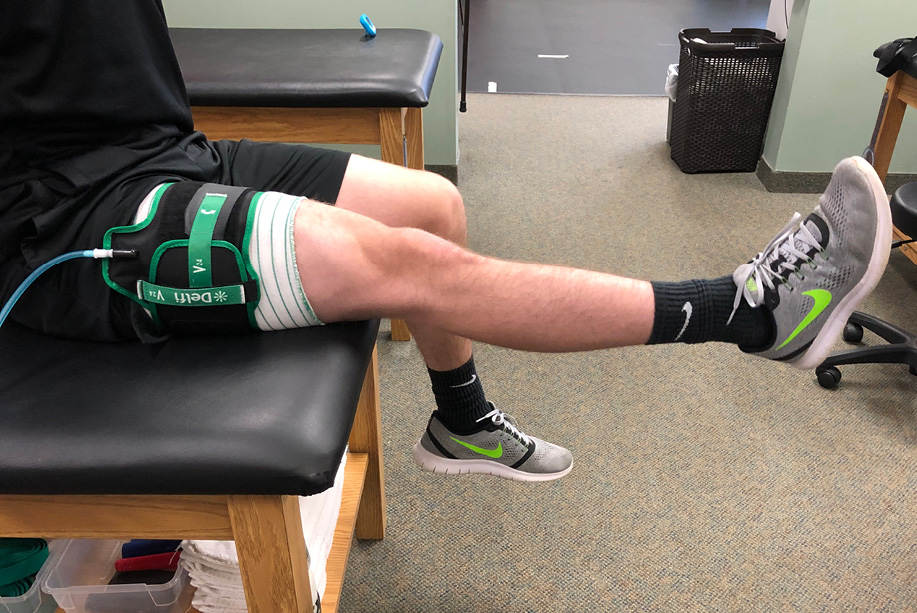
This results in a boost in anaerobic lactic metabolic process and the production of lactate. When there is blood pooling and a build-up of metabolites cell swelling takes place. This swelling within the cells triggers an anabolic reaction and leads to muscle hypertrophy. The cell swelling might actually cause mechanical tension which will then activate the myogenic stem cells as talked about above.
The cuff is put proximally to the muscle being exercise and low intensity exercises can then be performed. Because the outflow of blood is restricted utilizing the cuff capillary blood that has a low oxygen content gathers and there is a boost in protons and lactic acid. The exact same physiological adjustments to the muscle (eg release of hormones, hypoxia and cell swelling) will happen during the BFR training and low intensity exercise as would happen with high intensity workout.
( 1) Low intensity BFR (LI-BFR) leads to an increase in the water material of the muscle cells (cell swelling). It likewise speeds up the recruitment of fast-twitch muscle fibers. It is also hypothesized that when the cuff is gotten rid of a hyperemia (excess of blood in the blood vessels) will form and this will cause additional cell swelling.
These increases were similar to gains gotten as an outcome of high-intensity exercise without BFR A study comparing (1) high strength, (2) low intensity, (3) low and high strength with BFR and (4) low strength with BFR. While all 4 workout regimes produced boosts in torque, muscle activations and muscle endurance over a 6 week period - the high strength (group 1) and BFR (groups 3 and 4) produced the biggest effect size and were equivalent to each other.